February 8
- File:Amark.jpg (delete | talk | history | logs) – uploaded by Nicholasweed (notify | contribs | uploads).
- Logo of some sort. Likely copyrighted. No reason given to suggest that uploader is copyright holder. FASTILYsock(TALK) 04:02, 8 February 2010 (UTC)[reply]
- You really had no idea what to do with these did you? You put two up on PUF and then 1 here for deletion without indicating you put one up for deletion. So I'm going to copy what I wrote on PUF. This would be covered under german copyright law during world war 2. This comes from an article talking about porcelain made up until 1945, which puts it at 65 years old. I'm not sure how that applies to current copyright law. The article on German_copyright_law indicates that prior to 1965 copyright was for life + 8 years, it also states that logos however were not automatically covered under this law. Since the threshold for gaining copyright on these is high, I think the burden would need to be on you to show this ever actually achieved copyright protection, since it is more likely they didn't than did.--Crossmr (talk) 12:02, 9 February 2010 (UTC)[reply]
- Keep - the SS was determined to be a criminal organisation by the Nuremberg trials, so I think the SS symbol is public domain. I doubt the gothic style text is copyrighted, so my guess is this can be considered a free image. PhilKnight (talk) 01:10, 16 February 2010 (UTC)[reply]
- File:Julleuchterphoto.jpg (delete | talk | history | logs) – uploaded by Nicholasweed (notify | contribs | uploads).
- File:1st Company Insignia.jpg (delete | talk | history | logs) – uploaded by HarryKG (notify | contribs | uploads).
- This image is being listed for deletion "en masse" along with all of the others uploaded by this user. The reason for this nomination is a little bit strange and, while it would usually be more appropriate to tag every image as lacking license information, I think it would be more disruptive to have an edit war with the uploader across 49 image pages. Every image HarryKG (talk · contribs) uploaded is lacking license information. Additionally, the source for every image lists himself as the creator of the work, but many of them are obviously screenshots, video caps, etc. I used AWB to tag each and every one of the images as lacking license info, however the uploader has gone back and removed quite a few of these tags, and has, in their place, added a description of the image. In no case, however, did the user actually add a license tag or provide any information about the images' copyright statuses. Therefore, the images still qualify for deletion as having no license information. But, like I said, I think it would be disruptive and tedious to go back and keep adding the no license tags back on every image page each and every time the uploader removes them. Therefore, unless appropriate license tags are added, I request all of these images be deleted. Nick—Contact/Contribs 05:48, 8 February 2010 (UTC)[reply]
- As disruptive as it would be to remove in use images? I don't think so. Deletion isn't for clean-up. If the images are in use and appropriate, then fix them instead of deleting them because you don't want to deal with a difficult editor. There are procedures in place for doing so.--Crossmr (talk) 12:12, 9 February 2010 (UTC)[reply]
- The procedure in this case would be speedy deletion of all files under one or more file-related CSDs and a block of the uploader until such time as he acknowledges that he understands the requirements for uploading images. I have deleted some under F4 (no license) and some under F9 (copyvio). I will probably delete more. I have only explicitly closed the FFDs where the CSD was not F4. Anomiebot will close the others. Angus McLellan (Talk) 13:16, 11 February 2010 (UTC)[reply]
- If the problem is that the wrong license is on the page and a proper license for their use exists and the use is appropriate, the proper procedure would be to fix that. Not delete the files because some user is "difficult".--Crossmr (talk) 06:01, 15 February 2010 (UTC)[reply]
- File:Alex Raymond (King Features).jpg (delete | talk | history | logs) – uploaded by Ntnon (notify | contribs | uploads).
- Nothing known about the origin and copyright status of this image. Apparently, t was just copied from a tripod blog that was using it (but no longer exists). We need such information before claiming fair use. Damiens.rf 15:19, 8 February 2010 (UTC)[reply]
- Keep That was a dead link. I have replaced it with a link that works. As clearly stated in both photo caption and picture page, this photo (perhaps the best b/w ever taken of Alex Raymond) was published in Famous Artists and Writers, a book created in 1949 by King Features Syndicate for sales and promotional purposes. Pepso2 (talk) 04:33, 9 February 2010 (UTC)[reply]
- For "sales and promotional purposes"? Why is it ok for use to use this image under fair use? I do understand the photo is good and we need one, but this is not enough to make a case for fair use. --Damiens.rf 14:31, 9 February 2010 (UTC)[reply]
- Our educational remit will help us mount a fair use case in any court case. Is one pending? Hiding T 15:02, 9 February 2010 (UTC)[reply]
- A source has been provided that confirms the image is what it says it is. A non-free use rationale is already present on the image. As your concern was only regarding the insufficient source, I don't see any deletion rationale remaining here. postdlf (talk) 16:58, 9 February 2010 (UTC)[reply]
- The source link shows this image was used in a magazine. How is this helpful in building our rationale for using copyright material we don't know who the copyright holder is? --Damiens.rf 17:46, 9 February 2010 (UTC)[reply]
- How would the rationale be affected either way, given that we know the source publication and even the company that published it? A scan from a published book is a scan from a published book regardless of whether rights to that book were or are currently owned by the original publisher (which we happen to know here), a subsequent corporate purchaser, the photographer, or Old Widow Raymond. I mean, if you know that information, go ahead and provide it, but it isn't necessary, and that information isn't always available. Rather than who owns it, it instead matters what the image is and where it was and can be found (i.e., was it a scan from a published book, a scan of an unpublished family snapshot, a screenshot from a theatrically-distributed film). See also this recent discussion, and this DRV (in which you participated). Or am I misunderstanding your point? postdlf (talk) 18:25, 9 February 2010 (UTC)[reply]
- It would not matter if we were just writing an article about about the magazine itself, and used it as an illustration of the magazine (other transformative use scenarios are possible, of course). But we currently are simply taking a guy's picture that some magazine used and using it ourselves. We don't know if the magazine produced the image, paid someone to produce it, paid someone for a license to use it, asked someone for permission to use it for free under certain conditions.... the fact that the copyright holder (whoever it is) had not his interests hurt by the use of this picture on that magazine can not be extrapolated to the believe that our use here does not hurts his interest. That's why we need to know more about the image than just the fact that it once appear on Magazine M. --Damiens.rf 20:12, 9 February 2010 (UTC)[reply]
- It was a promotional book, not a magazine, published and distributed by a national newspaper syndicate to promote its featured talent. We have no reason to believe King Features Syndicate wasn't the author and owner of that photograph (it is not credited otherwise on the page where it is published). And even if that company was not the copyright holder, whether that holder got paid or gave the picture away as a gift is a completely separate question from who the holder is, and doesn't affect our non-free content analysis. You're basically asking for information on any commercial transaction underlying the publication of that photo, above and beyond a description of the image and publication itself. Whether not a current or prior copyright holder was a good businessman, fresh off the turnip truck, or a generous soul does not increase or diminish that image's copyright, fair use claims, or WP non-free use rationales, and it's ridiculous to even assume such transactions are typically available information. Can you point to a discussion or any instance on WP establishing that such information is necessary, above and beyond the source of the image? I've pointed to multiple recent discussions establishing that it is not. And once again, this is all tangential to your deletion rationale above, that the image origin and copyright status were unknown. That's no longer the case. postdlf (talk) 22:54, 9 February 2010 (UTC)[reply]
- The copyright holder is King Features Syndicate, the publishers of Alex Raymond's comic strip Flash Gordon. It shows Alex Raymond doing research, and was taken as part of a series of photographs depicting King's artists. I don't believe that the photographer was credited, but (as Postdlf writes), the unknown photographer is not important.
A photograph is clearly the best means to identify Raymond, but if it is desired I can also upload a self-portrait to be used as primary identification, and the photo can be moved down into the Flash Gordon section. ntnon (talk) 20:46, 10 February 2010 (UTC)[reply]
- Keep Missing info has been supplied. There is no registry of copyrighted images like there are for films and for books. Who owns the rights to an image can only be determined by a court.
- Incidentally, I think the photograph can and should be cropped to a tighter frame around the subject's head, if the sole encyclopedic purpose is to illustrate Raymond as a subject. Also, non-free images should generally not be uploaded at any larger size than they are to appear in the article. The less we use of the image and its creative composition and other elements the better, to minimize the portion of the work we use and reduce any potential effect on its commercial value. This one is already b&w, but making color photographs b&w where that would not detract from its encyclopedic function would also reduce our use of the creative elements in the original. I don't think we generally pay enough attention to those considerations. Instead we often focus simply on the binary question of whether we have a claim to use an image, when both non-free content policy and its legal underpinnings in fair use require us also to minimize our usage so it's tailored to our informational purpose. postdlf (talk) 16:23, 11 February 2010 (UTC)[reply]
- File:DougMacmillan.jpg (delete | talk | history | logs) – uploaded by Hiding (notify | contribs | uploads).
- Replaceable non-free image. Any image of this man before his 40 will be PD-Old. Damiens.rf 15:22, 8 February 2010 (UTC)[reply]
- Comment - PD-Old refers to the death of the author, not the subject of the picture.--Rockfang (talk) 03:12, 9 February 2010 (UTC)[reply]
- According to Douglas Macmillan, he died in 1969, so that rather cuts against replaceability. I don't understand the rest of the nom's comment. postdlf (talk) 03:42, 9 February 2010 (UTC)[reply]
- He was 40 years old in 1923. Any picture of him that has been published before that date will be PD. I'm sure there are some around. Replaceable does not means "available on google images". --Damiens.rf 14:32, 9 February 2010 (UTC)[reply]
- I am fairly confident that none exist, having researched the man and found none. Please explain why you are so certain they do exist, and what proof you have. Hiding T 15:00, 9 February 2010 (UTC)[reply]
- There is a recognized presumption that free images of living people may be created or found. There is no such recognized presumption that free images of dead people who were alive prior to 1923 may be found. postdlf (talk) 17:00, 9 February 2010 (UTC)[reply]
- I recognize no "recognized presumption"s you mention. We don't use non-free images when free ones are expected to exist, and this is the case here. For instance, we don't allow non-free images of U.S. politicians or military people because we know that some public domain official images are available somewhere. It's not reasonable to believe that no picture of this man was published before his 40s. --Damiens.rf 17:52, 9 February 2010 (UTC)[reply]
- Not a good analogy, given that works of the U.S. government are always public domain by statute, regardless of when created or published, government photographs of U.S. federal (not state, mind you) politicians and U.S. military personnel are taken as a matter of common procedure, and the U.S. government maintains readily available archives. We don't know that any pictures of this man were likely published, or more important, that even if there were published photographs, that such published copies are readily available or still in existence. And I've seen no justification for presuming that in every case in which someone was living prior to 1923, or in this case specifically. If you want to determine a consensus for such a blanket presumption, you might want to start a general discussion elsewhere first to weigh the pros and cons, rather than just unilaterally asserting it in the middle of a deletion discussion. postdlf (talk) 18:43, 9 February 2010 (UTC)[reply]
- File:Bill Finger by Jerry Robinson.jpg (delete | talk | history | logs) – uploaded by Hiding (notify | contribs | uploads).
- Replaceable drawing. Damiens.rf 15:23, 8 February 2010 (UTC)[reply]
- In what sense is this image replaceable? Hiding T 14:36, 9 February 2010 (UTC)[reply]
- Since it's been shown that it's acceptable to illustrate this bio with a drawing, we must do that with a free drawing. Simple drawings like this are replaceable. --Damiens.rf 16:24, 9 February 2010 (UTC)[reply]
- Though this comment post-dates the comment below, Hiding has clearly rebutted your claim that this image is replaceable with a free drawing. He correctly notes that it's impossible to create a free drawing of a dead man from a non-free image, as that would just be a non-free derivative work subject to the copyright of the original work that it was based upon. There is no recognized presumption applicable here that a free image of any sort exists or could be created of a dead subject. postdlf (talk) 16:54, 9 February 2010 (UTC)[reply]
- By looking to many different images of the same person, you get what the person looks like. An skilled artist with this information can make a completely new drawing of the person (using different cloths, in a "neutral" straigh-to-the-camera look, and this work will not be a derivative of the previous images. This is not much different than reading a lot of copyrighted sources to write an article on Wikipedia. --Damiens.rf 17:44, 9 February 2010 (UTC)[reply]
- It's very much different. You're rather simplifying the difficulty involved in making such a drawing, both in terms of creating an accurate drawing as a composite of others that is still substantially different from its sources, and in terms of reliably judging under copyright law that the drawing is sufficiently different from the sources it relied upon that it is not a derivative work (for what it's worth, I have a BFA and a law degree). So you're really inviting more serious problems than you're trying to solve. So even allowing such images is simply not the accepted practice on here, or on Commons for that matter, and every attempt I've seen in either forum to pass off user-created images that were at all based on copyrighted images has resulted in their deletion. It's best to have a prophylactic rule against such images, which, as I noted, would require both artistic expertise to create and legal expertise to evaluate in every instance, by comparing the image against all of its sources. postdlf (talk) 18:01, 9 February 2010 (UTC)[reply]
- So, everyone that makes and distributes a drawing of Harrison Ford, but had never seen the man in person (or in Wikipedia), is a copyright violator? In any case, the drawing we want as a replacement does not have to be "accurate", this the current one isn't either. --Damiens.rf 18:10, 9 February 2010 (UTC)[reply]
- The current one is by an artist notable enough to merit an article, which to some extent may belie concerns of accuracy, though I don't know of a reason to doubt that it's an accurate portrayal. As for your rhetorical question, such a Ford fanatic may be infringing copyright, they may have a fair use claim, but it's unlikely that they would develop a non-derivative, informative drawing based only on looking at copyrighted images. And, as I noted above, we really don't want to go down the rabbit hole of having to personally make the legal determination of what is and isn't a derivative illustration in each and every case. postdlf (talk) 18:49, 9 February 2010 (UTC)[reply]
- And why is it ok for us (ie, why is it fair use) to ignore this notable artist's rights over this image. Also, why is this notable artists depiction of the man necessary for the article? --Damiens.rf 20:21, 9 February 2010 (UTC)[reply]
- Asked and answered. And those are different questions than replaceability, which is the sole deletion rationale presented above. postdlf (talk) 23:11, 9 February 2010 (UTC)[reply]
- Oppose, replaceability is hotly contested, no free images of Bill Finger exist, and no free one can be created since the man is dead and any drawing would therefore be created from a copyrighted image of the man and be subject to copyright. Hiding T 14:52, 9 February 2010 (UTC)[reply]
- Anyone with a shovel and camera can take a copyright free image of him, so a free equivalent is always available. --Richard Arthur Norton (1958- ) (talk) 20:26, 9 February 2010 (UTC)[reply]
- In addition, Jerry Robinson produced this drawing knowing Bill Finger (with whom he worked). Moreover, there are only two or three known photographs of Finger, and they are not of particularly high circulation or resolution (two can be seen here), so the liklihood of a photograph being found that would be better illustrate Finger is slim. The liklihood that a better provenanced drawing could be sourced or created in also very unlikely. In addition - not that it matters here, as Postdlf has noted - Robinson created this artwork for the sole purpose of depicting and identifying Finger, a very important figure, but one whose face is/was rarely seen. ntnon (talk) 20:58, 10 February 2010 (UTC)[reply]
- Following Hiding, Postdlf and ntnon it should be kept, for now anyway unless a better image turns up. It is worth noting that the Dial B for Blog images have been deliberately given a sepia tint and made fuzzier (as can been seen with the image of Catherine Yronwode, as it is the same one we use here). So it is likely that these images exist in a larger and clearer format that is seen on those pages and the original image for this would be ideal. It'd be worth contacting the individual who runs the blog to ask them about the original image. It might be worth speaking to Catherine as she is an active editor here. I doubt any of this will yield results over night (or ever) but they are angles worth pursuing, until they turn something up though it seems the drawing is our best bet until then. (Emperor (talk) 17:27, 14 February 2010 (UTC))[reply]
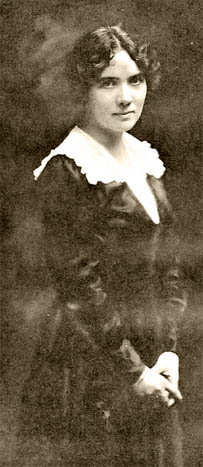
- File:Picken.jpg (delete | talk | history | logs) – uploaded by PKM (notify | contribs | uploads).
- Replaceable non-free image. Any picture of this lady before her 37 will be public domain in the U.S.. She was already a prolific author at that age. Damiens.rf 15:37, 8 February 2010 (UTC)[reply]
Oppose, subject is dead and replaceability has not been established. As above, the nom's comment seems based on the misapprehension that a photograph enters the public domain purely based on when it was taken. There are no guidelines or policies that I am aware of telling us to presume public domain photos are available just because a subject was living prior to 1923. postdlf (talk) 03:52, 9 February 2010 (UTC)[reply]
- We don't need a guideline for everything (we don't have one explictly stating we can use non-free images for dead people either). I assert this images is replaceable because this woman was a prolific published writer at 1923, and it's not too much to expect that some photos of her were published at that time. Those photos are now PD. We just have to find them. --Damiens.rf 14:35, 9 February 2010 (UTC)[reply]
- Keep It is a silly argument to say that a replaceable free image is available of a dead person, without coming up with one. --Richard Arthur Norton (1958- ) (talk) 18:26, 9 February 2010 (UTC)[reply]
- Richard Arthur Norton is mistaken, as WP:NFCC#Enforcement shows, but I'll do his homework for him this once: the frontispiece of Picken's 1918 Secrets of distinctive dress shows her, and in the period in which she was probably most active. The Cornell copy is blurry, but there is a clearer vwersion here. Angus McLellan (Talk) 22:39, 10 February 2010 (UTC) P.S. Free image uploaded at commons:File:Mary Brooks Picken.jpg, and the non-free one replaced by this. Angus McLellan (Talk) 12:47, 11 February 2010 (UTC)[reply]
- Your not doing my homework, you are doing Damiens.rf's homework. --Richard Arthur Norton (1958- ) (talk) 13:05, 11 February 2010 (UTC)[reply]
- As the section there on "burden of proof" shows, I am not. Still, it's a collaborative enterprise, and it is clearly beneficial to find a replacement. So I'll apologise for the sarcasm, but the message is the right one. Nominators do not need to find replacements themselves, only to have a reasonable case that a replacement can/does/will exist. Regards, Angus McLellan (Talk) 15:44, 11 February 2010 (UTC)[reply]
- Thanks, all. Nice detective work. - PKM (talk) 18:45, 13 February 2010 (UTC)[reply]
- File:Redgrave-Head.jpg (delete | talk | history | logs) – uploaded by Tyrenius (notify | contribs | uploads).
- Non-free (although with a permissive license) picture of an existing object. Also, I'm not sure why the article needs this specific imagery anyway. Damiens.rf 15:41, 8 February 2010 (UTC)[reply]
- Keep website license allows wiki use. --Richard Arthur Norton (1958- ) (talk) 16:42, 8 February 2010 (UTC)[reply]
- Is "Photo © Stuckism 2004: may be used with credit as indicated on the web" equivalent to a free license (GFDL, CC or whatever other license is considered "free)? If it is, then the image is freely licensed and this FfD is irrelevant as a license problem is the only reason this would be deleted. If that qualification does not count as a free license, however, then this image is used as fair use, because images cannot be licensed free for Wikipedia only. Assuming the image is nonfree, it should be deleted as totally failing NFCC.8 As a side note, is the artwork itself copyrighted? If so, is it possible to release a photograph of the work under a free license? ÷seresin 04:33, 16 February 2010 (UTC)[reply]
- File:PosvarPitt.jpg (delete | talk | history | logs) – uploaded by Crazypaco (notify | contribs | uploads).
- Not-enough information is provided to verify the source of this non-free image. It says "University of Pittsburgh Archives" but I'm sure there a great deal of image on that archives. Also, the image is used decoratively in at least 2 articles. Damiens.rf 15:43, 8 February 2010 (UTC)[reply]
- The image is used in three articles, none of which have been tagged with notices about this image's possible deletion. postdlf (talk) 16:12, 8 February 2010 (UTC)[reply]
- Keep - Although a link had been included to the source archive where the image could be easily found, a direct link to the original source image is now provided. Regardless of this particular image, it should be noted that there is no requirement to directly link a source of a non-free image, particularly if the source could be scans of materials that are off-line. Further, "I'm sure there is a great deal of image on that archives" is not a valid justification for any image deletion.
- Regarding the second point, claims of inappropriate fair use justification for an image on one article does not warrant deletion of that image when it has legitimate, and non-disputed, fair use claims on another article. Rather, the preferred action should be removal of the image from the article with questionable fair use claims. To that end, I have gone ahead and removed the image from the gallery on the Posvar Hall article for which there are questionable fair-use claims. CrazyPaco (talk) 18:39, 8 February 2010 (UTC)[reply]
- that could be, but this was taken after 1963 so renewal is moot. The first appearance in publication is uncertain, so the copyright is conservative.CrazyPaco (talk) 23:50, 10 February 2010 (UTC)[reply]
- Then I am surely - no almost - wrong. Angus McLellan (Talk) 09:27, 11 February 2010 (UTC)[reply]
- Not that this influences the deletion discussion, but not necessarily. If the image was first published without a copyright notice prior to 1977, or between 1978 and March 1, 1989, without a copyright notice, and where the copyright was not later registered within 5 years, then it would be PD. That said, other than finding such an original publication, there is no way at this time to put this image in the public domain. CrazyPaco (talk) 22:46, 11 February 2010 (UTC)[reply]
- File:Yvonne Craig.jpg (delete | talk | history | logs) – uploaded by Postdlf (notify | contribs | uploads).
- Non-free image of a living woman. Damiens.rf 15:50, 8 February 2010 (UTC)[reply]
- To be fair, it's an image from over 40 years ago of a living woman who is now 72, who apparently hasn't done any acting since the early '70's, so an image of her now is not in any sense the informational equivalent of one of her during her active career period, particularly given the importance of physical appearance to acting (if she were a politician, then the difference arguably wouldn't matter as much). There are two other images in the article illustrating two of her notable roles. However, in one of them she is wearing a mask, and in the other one, she is covered in head-to-toe green makeup, so neither is the equivalent of the image under consideration here. postdlf (talk) 15:57, 8 February 2010 (UTC)[reply]
- According to imdb, she is still active. Also, her youngself look is no more real that her oldself look. Even more, also according to imdb she made 15 movies between 1923 and 1977 (and she was not old at that time). The trailers for any of these movies are public domain. Some research will certainly review a good free image of this lady. --Damiens.rf 16:22, 8 February 2010 (UTC)[reply]
- The WP article doesn't state any roles for her past 1974, but if she's still active (and particularly if the movie trailer sources are viable), you've convinced me. But it's important to remember that replaceability always requires an "equivalent...that would serve the same encyclopedic purpose." That the subject is still alive is relevant but not necessarily conclusive. postdlf (talk) 16:39, 8 February 2010 (UTC)[reply]
- Keep an image from peak of career is not a substitute for someone at the terminus of their career. --Richard Arthur Norton (1958- ) (talk) 16:40, 8 February 2010 (UTC)[reply]
- The article is not about the peak of Yvonne Craig's career. It's about Yvonne Craig. --Damiens.rf 16:53, 8 February 2010 (UTC)[reply]
- Its not about Yvonne Craig as an old woman either. It is about her entire life. Younger photos provide context, any photo generated today cannot do that.--Crossmr (talk) 12:15, 9 February 2010 (UTC)[reply]
- Being about her entire life, any photo would be just as valid. --Damiens.rf 16:32, 9 February 2010 (UTC)[reply]
- As WP:NFC#UUI#11 states, "for some...retired individuals whose notability rests in large part on their earlier visual appearance, a new picture may not serve the same purpose as an image taken during their career, in which case the use would be acceptable." (emphasis added) This clearly recognizes that we are not to treat an article's subject as a singular thing, such that any depiction is the informational equivalent of any other. You made some good, much more nuanced points above regarding why this image may not be necessary (barely), but your apparent insistence that all potential images of a subject are replaceable with any other is not supported by non-free content policy, guidelines, or basic editorial judgment. postdlf (talk) 14:38, 9 February 2010 (UTC)[reply]
- Despite any preferences you may have for her earlier look, she kept being an active actress as she got old, and a current image, or any screenshot from a trailer before 1977 will be just as much "she". Free images exist and can be created, but some work should be done. Sean Connery has also changed a lot, but no unique "look" of him is more "valid" or "correct" than the others. --Damiens.rf 16:32, 9 February 2010 (UTC)[reply]
- Delete - replaceable.--Rockfang (talk) 03:19, 9 February 2010 (UTC)[reply]
- keep unless provided with a time machine.--Crossmr (talk) 12:15, 9 February 2010 (UTC)[reply]
- Asking for a time machine is a silly argument, you can wait till she dies and then you would have all the time in the world to photograph the corpse, and later the bones. --Richard Arthur Norton (1958- ) (talk) 18:28, 9 February 2010 (UTC)[reply]
- Then I could just photoshop on some young skin and it would look just like this photo right?--Crossmr (talk) 00:33, 10 February 2010 (UTC)[reply]
- File:19580428 Walter O'Malley Time Magazine Cover.jpg (delete | talk | history | logs) – uploaded by TonyTheTiger (notify | contribs | uploads).
- No article needs an illustration, many reference works are devoid of illustrations. They are there to enhance the reader's experience within US copyright law and Wikipedia's concept of fair-use. --Richard Arthur Norton (1958- ) (talk) 17:06, 8 February 2010 (UTC)[reply]
- By our common practice here, some articles do "need" imagery. It's commonly accepted, for instance, that biographies needs headshots, articles about music albuns need the album cover, articles about books need the book cover, articles mentioning controversial or award winning photographies need to show the photograph, articles about famous paintings need to show the painting. There are many others "rules", but surely not "articles that mention someone made the cover story of a magazine needs to show the cover image". --Damiens.rf 18:45, 8 February 2010 (UTC)[reply]




_Insignia.jpg)
_Insignia.jpg&action=delete&wpReason=%5B%5BWikipedia%3AFiles+for+deletion%2F2010+February+8%23File%3ACommand+and+Logistics+company+%28CCL%29+Insignia.jpg%5D%5D)

_Insignia.jpg&action=history)


.jpg?lang=en)
.jpg&action=delete&wpReason=%5B%5BWikipedia%3AFiles+for+deletion%2F2010+February+8%23File%3AAlex+Raymond+%28King+Features%29.jpg%5D%5D)
.jpg?lang=en)
.jpg&action=history)

.jpg)
.jpg)
.jpg)
.jpg)


-2010-02-09T18:26:00.000Z-File:Picken.jpg)


-2010-02-11T13:05:00.000Z-File:Picken.jpg)


-2010-02-08T16:42:00.000Z-File:Redgrave-Head.jpg)


-2010-02-09T02:13:00.000Z-File:PosvarPitt.jpg)


-2010-02-08T16:40:00.000Z-File:Yvonne_Craig.jpg)


-2010-02-09T18:28:00.000Z-File:Yvonne_Craig.jpg)


-2010-02-08T16:35:00.000Z-File:19580428_Walter_O'Malley_Time_Magazine_Cover.jpg)


